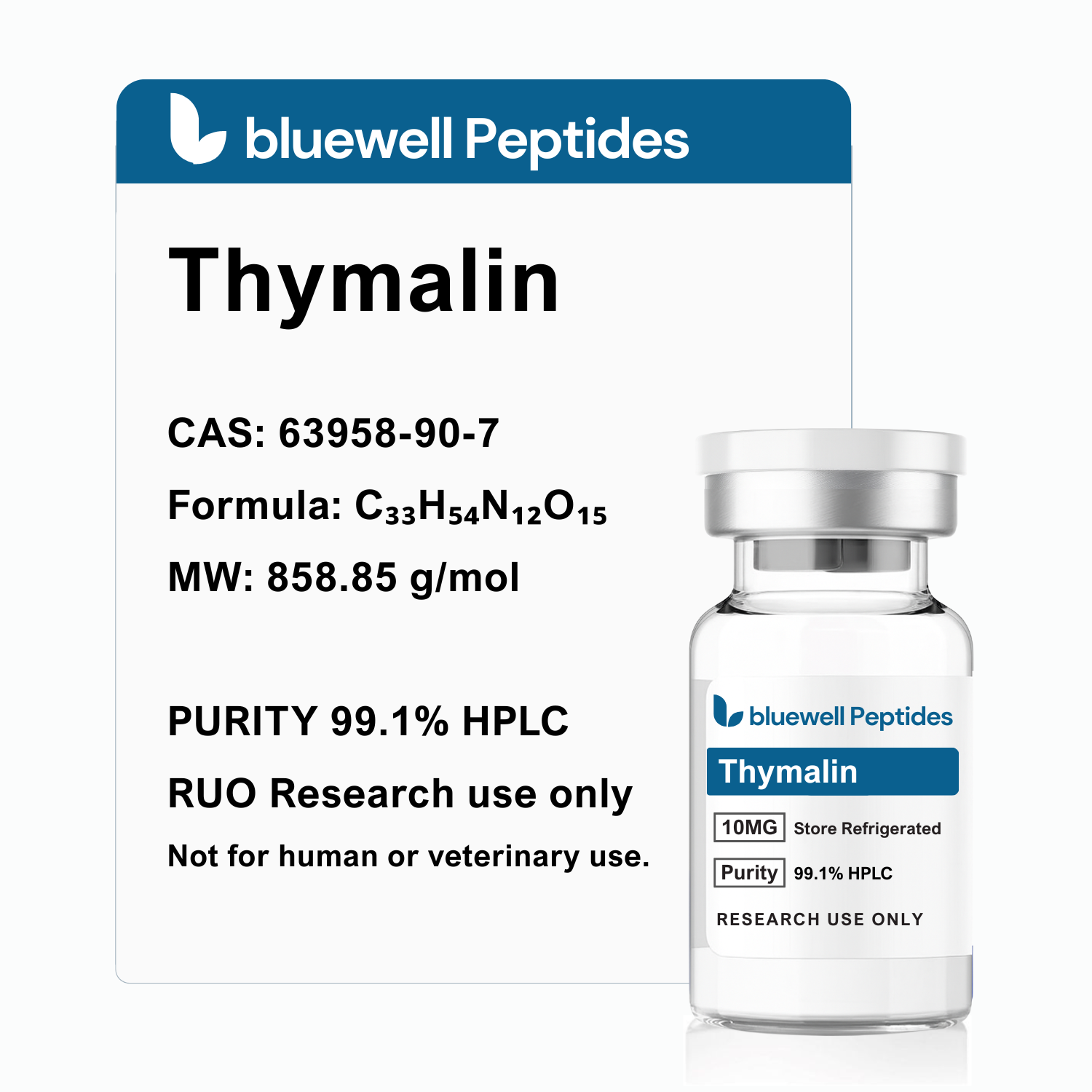
Thymalin 10mg – High-Purity Research Peptide
Thymalin 10mg is a synthetic peptide supplied in lyophilised (freeze-dried) form for stability and ease of laboratory handling. Frequently referenced in peptide research literature, Thymalin is utilised in scientific studies involving peptide signalling, immunological pathways, and experimental biological systems.
Every batch is independently HPLC-tested at >99.1% purity and supplied with a full Certificate of Analysis (COA) for verification and traceability.
What is Thymalin?
Thymalin is a peptide complex originally derived from thymic tissue and is commonly referenced in peptide research involving cellular communication, immune-related pathways, and peptide-mediated biological processes.
It is utilised in controlled laboratory settings to investigate peptide interactions, signalling mechanisms, and experimental biological models.
Scientific Identifiers
CAS Number: 63958-90-7
Molecular Formula: C₄₅H₈₀N₁₂O₁₀S₂
Molecular Weight: 1045.30 g/mol
Sequence: pGlu-Ala-Lys-Ser-Gln-Gly-Gly-Ser-Asn-OH
Purity: >99.1%
Quantity: 10mg
Form: Lyophilised Solid
Storage: Store at −20°C, protected from light
Catalogue Number: BWP-THYM-10
Usage and Reconstitution
Thymalin is supplied as a lyophilised powder to preserve structural integrity and maximise stability during storage.
For laboratory applications, it may be reconstituted using bacteriostatic water or another suitable solvent in accordance with standard peptide-handling protocols. For detailed preparation guidance, please refer to the Bluewell Peptides Reconstitution Guide.
Why Choose Bluewell Peptides?
• HPLC-verified >99.1% purity
• Full COA included with every batch
• Fast, secure UK shipping
• Transparent, research-focused supplier
• Excellent customer support and verified reviews
Legal and Safety Information
All products sold by Bluewell Peptides are intended strictly for laboratory research and educational use only.
They are not approved for human or veterinary use, and are not intended to diagnose, treat, cure, or prevent any disease.
All research must comply with relevant laws and safety protocols.
Reviews
There are no reviews yet.